A community takes shape
Before the Civil War, Pleasant Smith Humble brought his family into the area and operated a ferry near the San Jacinto River. Local accounts tell of flooding that pushed the family toward higher ground, where a small community began to form. By the late 1800s, Humble was a crossroads settlement surrounded by timber, farms and sawmills.
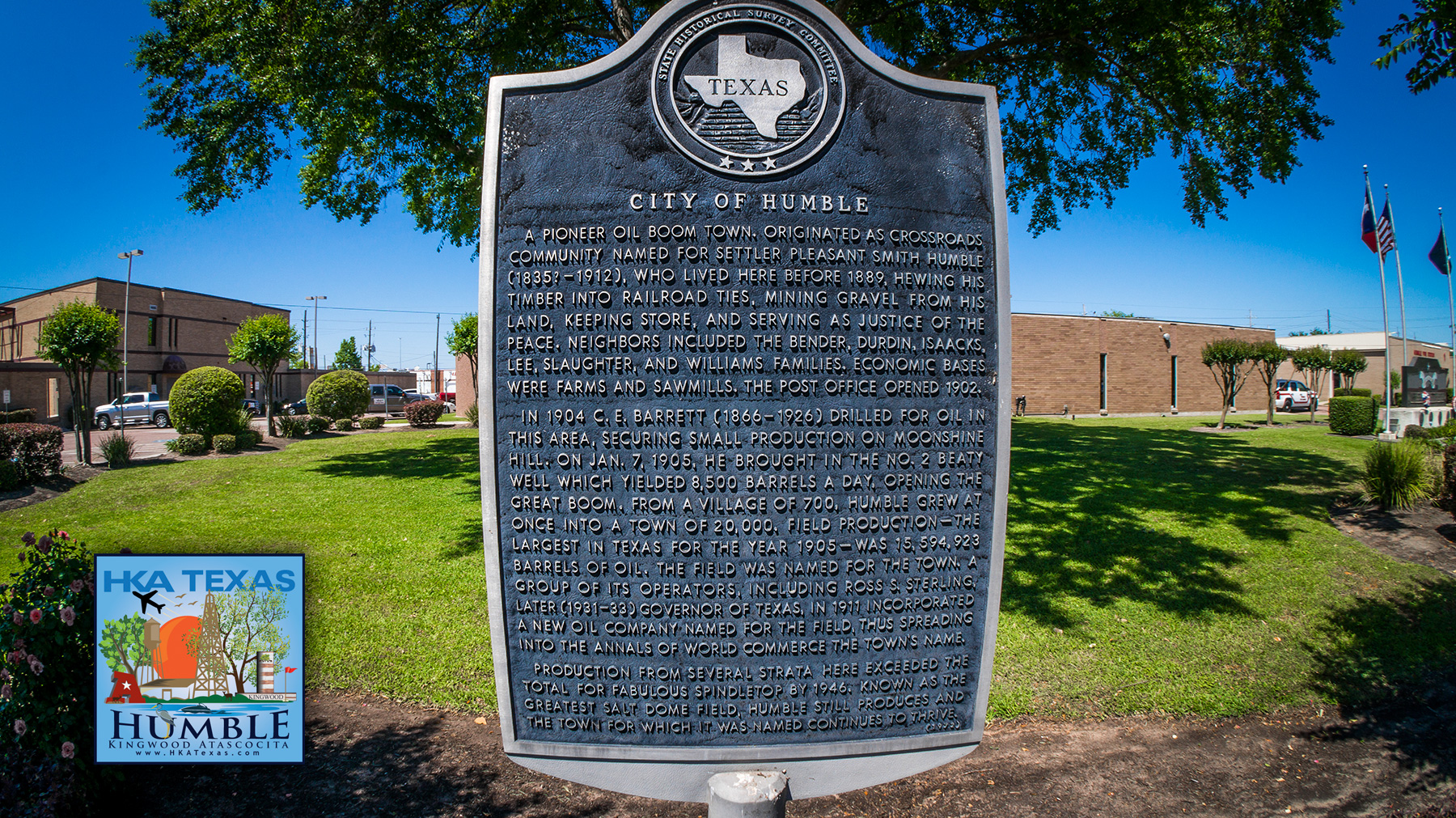
The community took the name of Pleasant Humble, who cut railroad ties, mined gravel, kept a store and served as a justice of the peace. Families including the Benders, Durdins, Isaacks, Lees, Slaughters and Williamses were among the early residents associated with the area.
Oil changes Humble
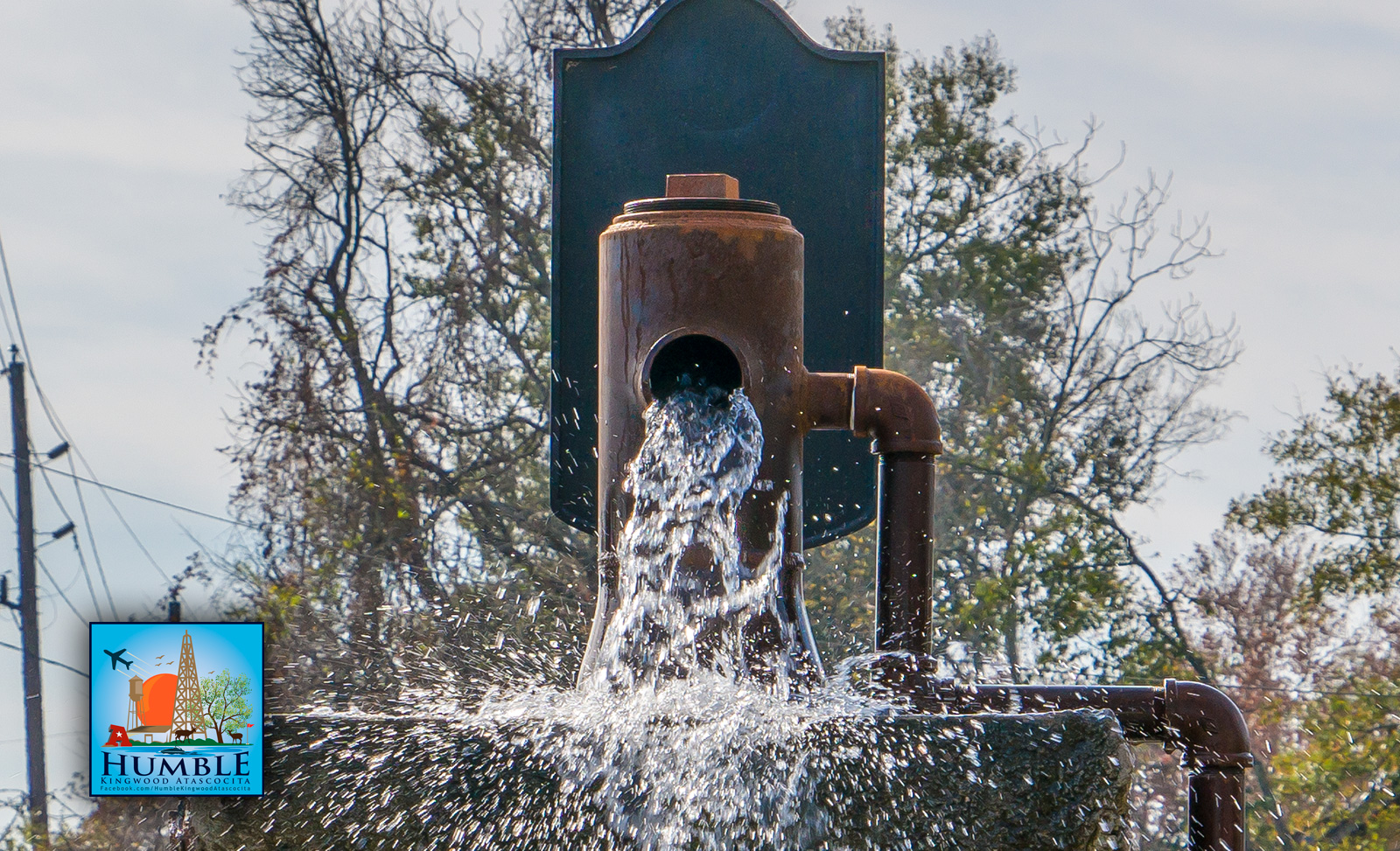
Oil exploration transformed the community at the beginning of the 20th century. The Texas Historical Commission’s City of Humble marker records that C. E. Barrett drilled in the area in 1904 and that the No. 2 Beaty well came in on January 7, 1905, with production estimated at 8,500 barrels a day.
The boom was immediate. A community of only hundreds grew into a town of thousands as drillers, merchants and workers arrived. In 1905, the Humble field became the largest producing oil field in Texas, producing more than 15 million barrels that year. Moonshine Hill, northeast of town, became a boom community of its own.
The Humble name travels far beyond town
The oil field ultimately gave its name to one of the best-known companies in Texas business history. Humble Oil Company was organized in 1911, and Humble Oil & Refining Company was formed in 1917. Standard Oil of New Jersey acquired a 50-percent interest in Humble in 1919. The Humble, Esso and Enco identities were eventually consolidated under the Exxon name in the early 1970s; Exxon and Mobil merged in 1999 to form ExxonMobil.
From oil town to growing suburban center
Humble continued to change long after the first oil boom. Houston Intercontinental Airport opened nearby in 1969, helping accelerate development across Houston’s north side. New residential communities followed throughout the Lake Houston area, including Kingwood, Forest Cove, Atascocita, Eagle Springs, Summerwood and The Commons of Lake Houston.
Population growth brought a corresponding expansion of retail, restaurants and services. Deerbrook Mall became a major commercial center in the mid-1980s, while development continued to spread through Humble, Kingwood, Atascocita and surrounding communities.
Humble’s landscape has changed dramatically, but traces of its early settlement, railroad, timber and oil history remain throughout the area.